Ball mill for milling and screening aluminium dross
Price from-to, depending on configuration
20,000-40,000 EUR (EXW)
Price depends on configuration. Informational only (Art. 71 Polish Civil Code), not a binding offer. Verified: 2026-07-18.
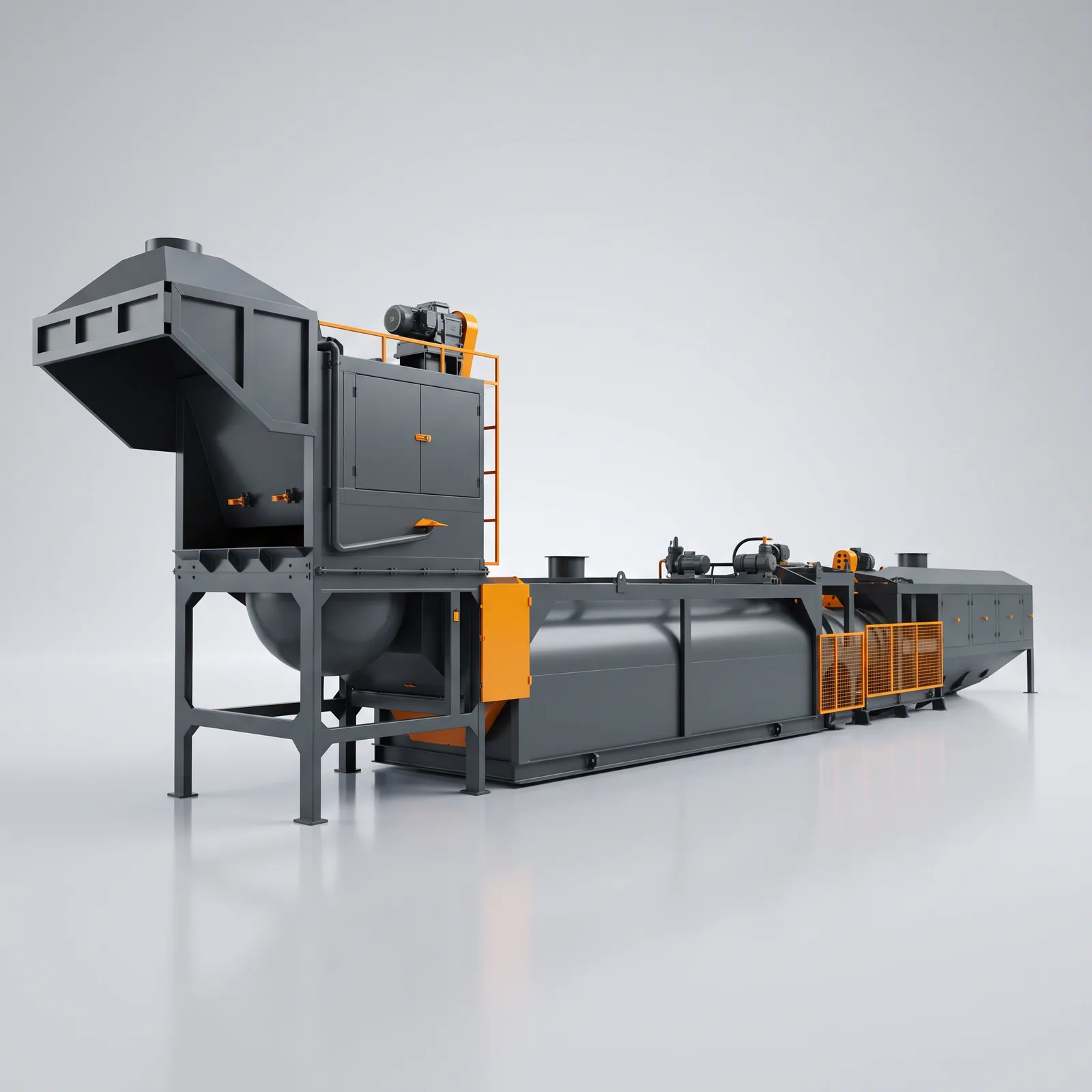
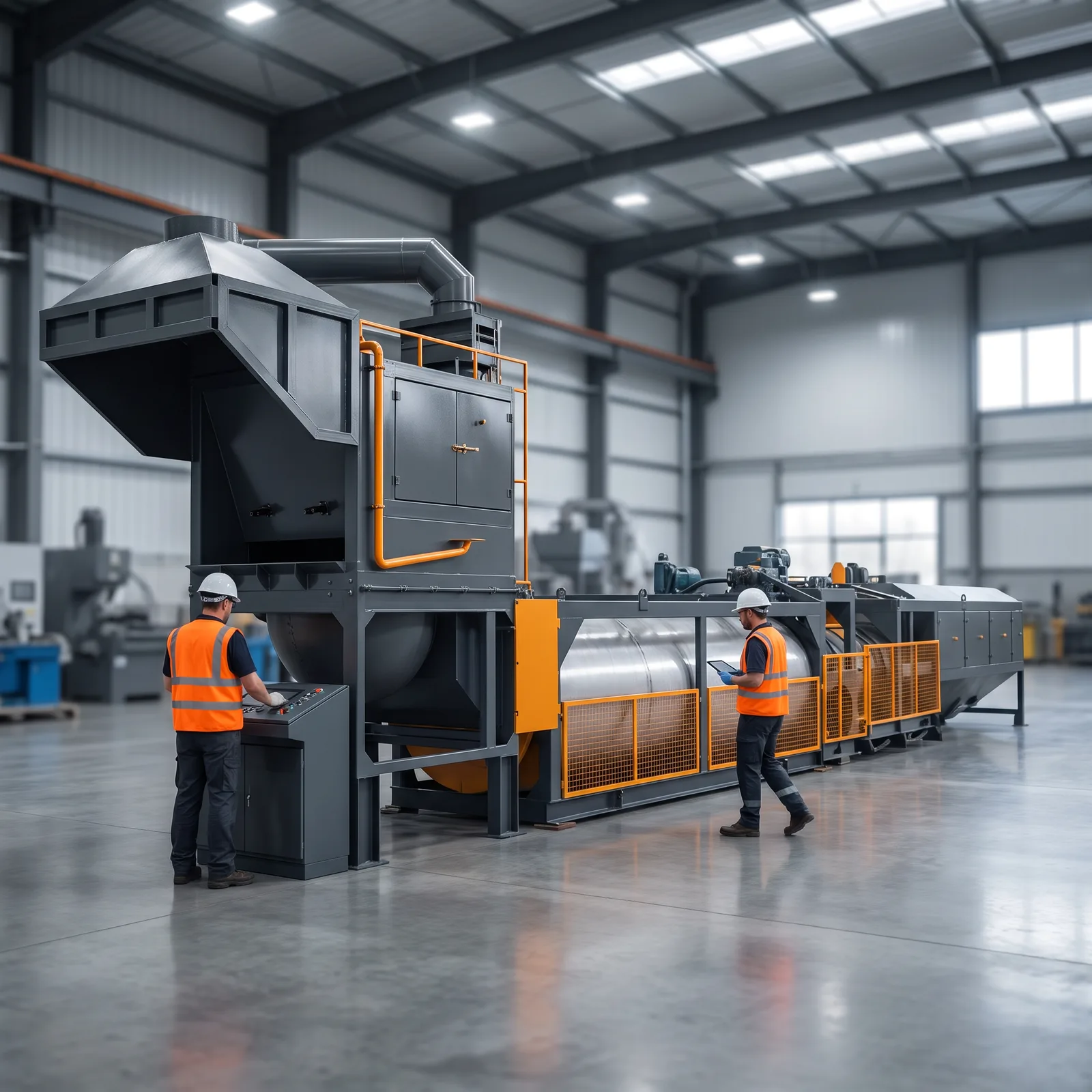
Even after hot separation, dross still holds aluminium: granules locked inside lumps of oxide. The ball mill closes the processing chain: a rotating drum with iron balls breaks up and grinds the cooled dross, and the screening section splits the output into three size fractions: coarse, middle and fine. Coarse and middle fractions are metallic aluminium that goes straight back into your melting furnace; the fine fraction is mostly oxides, a uniform, classified material that is far easier to sell or dispose of than raw dross of unknown composition.
The design is deliberately simple: two sections (mill drum and screen) on a common frame, wear-resistant cast-iron working parts and a minimum of electronics, which means a minimum of breakdowns in the dirtiest corner of the plant. Drum capacity and length are configured to the amount of dross you generate; one mill comfortably serves two hot dross recovery machines, so a single unit usually covers the whole remelt department. A pulse-jet bag filter is an option worth taking: dross milling makes dust, and it is best handled at source.
An honest note: on its own, the mill will not work miracles on cold dross. The stated recovery above 85% applies to the full chain: hot separation, cooling, milling and screening. If you currently sell dross for scrap prices while roughly 40% of its weight is aluminium, the complete processing line pays back faster than intuition suggests. See the dross recycling category or send us your monthly dross tonnage and we will run the numbers. The price range is public: €20-40k EXW depending on capacity, drum length and dust collection.
Specification
| Working principle | rotary drum with iron balls + screening section |
|---|---|
| Output fractions | 3 (coarse / middle / fine) |
| Al recovery (full chain) | >85% |
| Pairing | 1 mill serves 2 hot dross machines |
| Capacity / drum length | configured to your dross volume |
| Options | pulse-jet bag-filter dust collection |
CE status
CE: machine requires EU conformity work, we arrange a compliance quote
Maszyna w standardzie fabrycznym wymaga dostosowania do wymogów UE (osłony części wirujących, obwody bezpieczeństwa, dokumentacja). Zakres i koszt podajemy w ofercie.
→ How we workTransaction terms
- Production lead time: 6-10 wks
Applications
Milling and grading of dross after hot separation: recovering aluminium granules for in-house remelting, fine oxide fraction for sale or disposal; processing of cold dross stockpiled on site.
Who it is for
Foundries and extrusion plants with their own melting furnaces that want to process dross in-house instead of selling it for a fraction of its aluminium value; plants that already run a hot dross machine and are completing the chain.
FAQ
How much does a dross ball mill cost?
Indicatively €20-40k EXW, depending on capacity, drum length and whether dust collection is included. The range on this page is public. For an exact quote, tell us how many tonnes of dross you generate per month.
Does the mill work standalone or only in a line?
Mechanically it is a standalone machine: it will also grind cold dross from a stockpile. But the >85% recovery figure applies to the full chain: hot separation, cooling, milling and screening. Without a hot dross machine upstream, most of the aluminium oxidises before it ever reaches the mill.
What do I do with the three fractions?
Coarse and middle fractions are metallic aluminium: they go back into your melting furnace. The fine fraction is mostly oxides: a uniform material that is easier to sell or dispose of than raw, mixed dross.
What about CE marking?
In factory standard the machine requires EU conformity work, mainly guarding of rotating parts, safety circuits and documentation. We state the scope and cost of that work plainly in the offer instead of pasting a dubious CE sticker.