Aluminium billet casting line: from own scrap to extrusion billets
Price from-to, depending on configuration
250,000-600,000 EUR (EXW)
Price depends on configuration. Informational only (Art. 71 Polish Civil Code), not a binding offer. Verified: 2026-07-18.
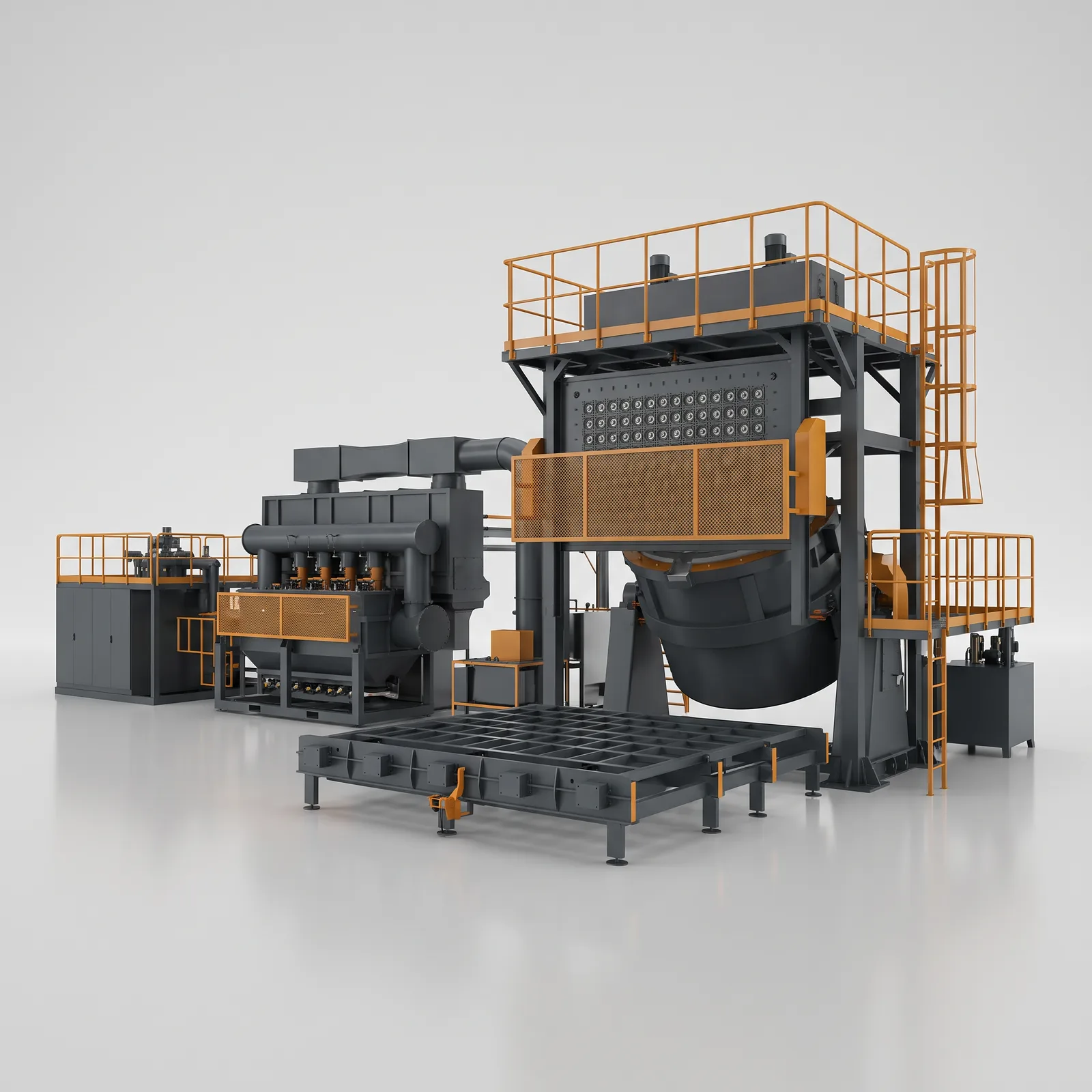
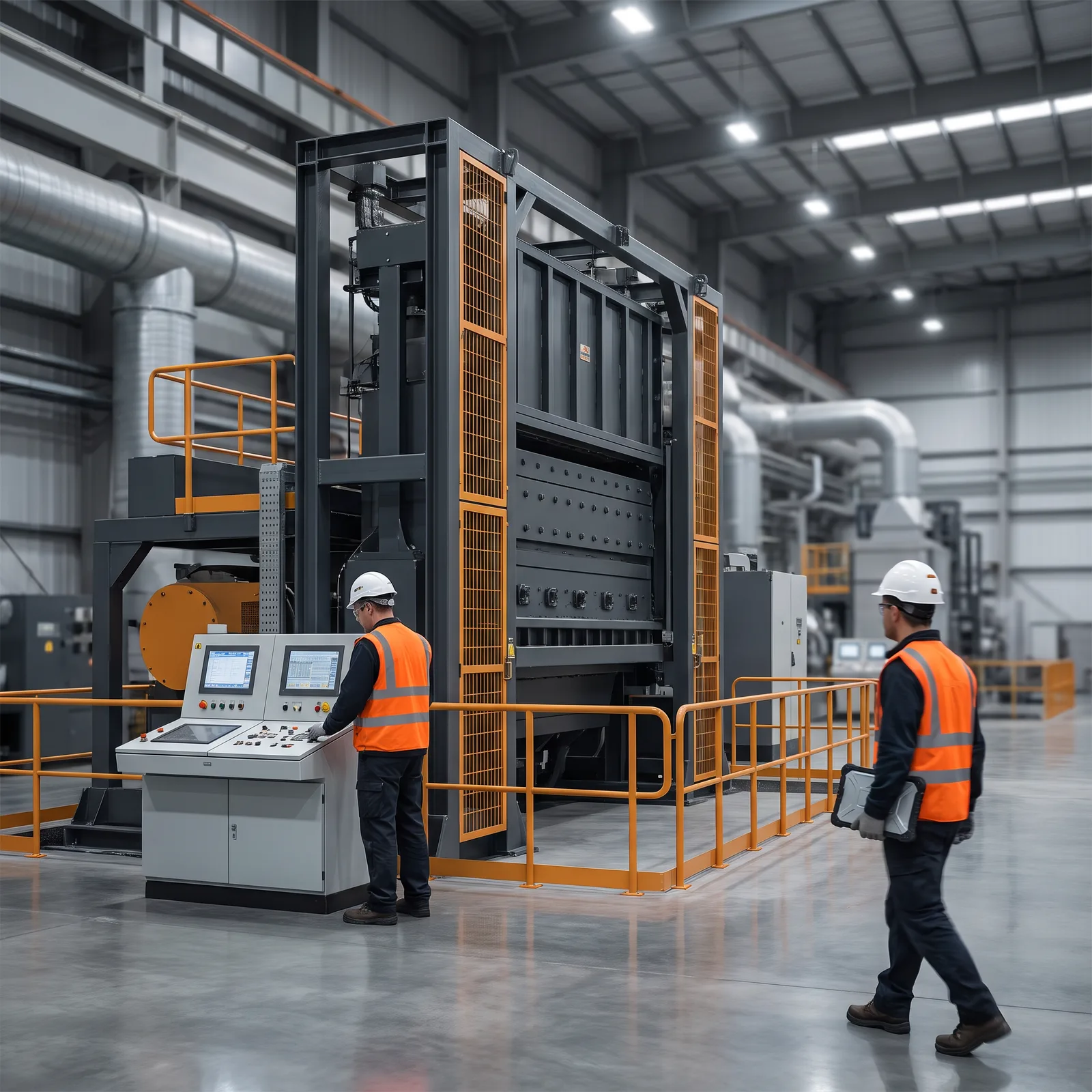
A billet casting line closes the aluminium loop inside your plant: production scrap (profile ends, saw offcuts, rejects) goes into the melting furnace and comes back to the press as full-value extrusion billet. With today's billet premiums and a growing scrap stream, more and more extruders are running this calculation seriously; the same line also works as the core business of a recycler selling billets to extrusion plants.
The heart of the line is vertical semi-continuous casting with air-slip mould technology: a thin oil-and-air film between the solidifying metal and the mould produces billets with a smooth surface and a thin segregation zone, good for extrusion without scalping, which directly improves yield when you remelt your own scrap. The oil/air supply system includes a graphite tester for checking the permeability of the mould rings. Metal quality is guarded by an electromagnetic stirrer under the tilting melting furnace (uniform chemistry and bath temperature), a box-type degasser working in-line between furnace and casting table, and filtration. The furnace fires through regenerative burners that recover flue-gas heat, the biggest single cost lever in remelting.
Honestly: this is a project-class investment, not an off-the-shelf machine. It pays off with a stable scrap stream (indicatively from several hundred tonnes a year), and freshly cast billets still need homogenizing before the press, so we typically quote the line together with a homogenizing furnace from our industrial furnace range. We size melting capacity, billet diameters and lengths to your press and scrap mix, publish indicative price ranges instead of 'price on request', and walk you through the full plant economics in our extrusion line cost guide. (US spelling: aluminum billet casting line.)
Specification
| Casting technology | vertical semi-continuous, air-slip mould |
|---|---|
| Melting furnace | tilting, regenerative burners (flue-gas heat recovery) |
| Bath stirring | electromagnetic stirrer under the furnace |
| Metal treatment | box-type in-line degasser + filtration |
| Oil/air system | with graphite tester for mould rings |
| Billets | round, diameter and length matched to your press |
| Control | Siemens or Mitsubishi PLC, parameter logging |
CE status
CE: machine requires EU conformity work, we arrange a compliance quote
Linia w standardzie fabrycznym wymaga dostosowania do wymogów UE (osłony, obwody bezpieczeństwa, ATEX dla układów gazowych, dokumentacja). Zakres i koszt dostosowania wyceniamy w ofercie, wraz z jasnym wskazaniem, kto formalnie odpowiada za zgodność.
→ How we workTransaction terms
- Production lead time: 20-30 wks
Applications
Remelting in-house production scrap into extrusion billets (vertical semi-continuous casting), merchant billet production for extrusion plants, industrial-scale aluminium scrap recycling.
Who it is for
Larger extruders with a substantial in-house scrap stream seeking independence from billet suppliers; recyclers and casthouses entering extrusion billet production.
FAQ
How much does an aluminium billet casting line cost?
Indicatively €250-600k EXW depending on melting capacity, number of casting strands and equipment (stirrer, degasser, filtration). The range is public; the exact quote follows an analysis of your scrap stream and the billet diameters your press needs.
At what scrap volume does an own casting line pay off?
As a rule of thumb, from several hundred tonnes of in-house scrap per year; below that, selling scrap and buying billets is usually the better sum. Send us your annual scrap balance and current billet prices; we calculate the payback on your numbers, not brochure numbers.
What does air-slip casting change compared with conventional moulds?
The metal solidifies on an oil-and-air film instead of directly on the mould wall, giving a smooth billet surface and a thin segregation zone. The billet goes to the press without scalping, a direct yield gain when remelting scrap.
What about CE marking?
The factory-standard line requires EU conformity work: guarding, safety circuits, gas-train compliance, documentation. We quote that scope openly and state plainly how conformity responsibility is handled when you buy from us, instead of promising a turnkey CE sticker.