Polyurethane pour-and-debridge line for thermal barrier profiles
Price from-to, depending on configuration
35,000-70,000 EUR (EXW)
Price depends on configuration. Informational only (Art. 71 Polish Civil Code), not a binding offer. Verified: 2026-07-18.
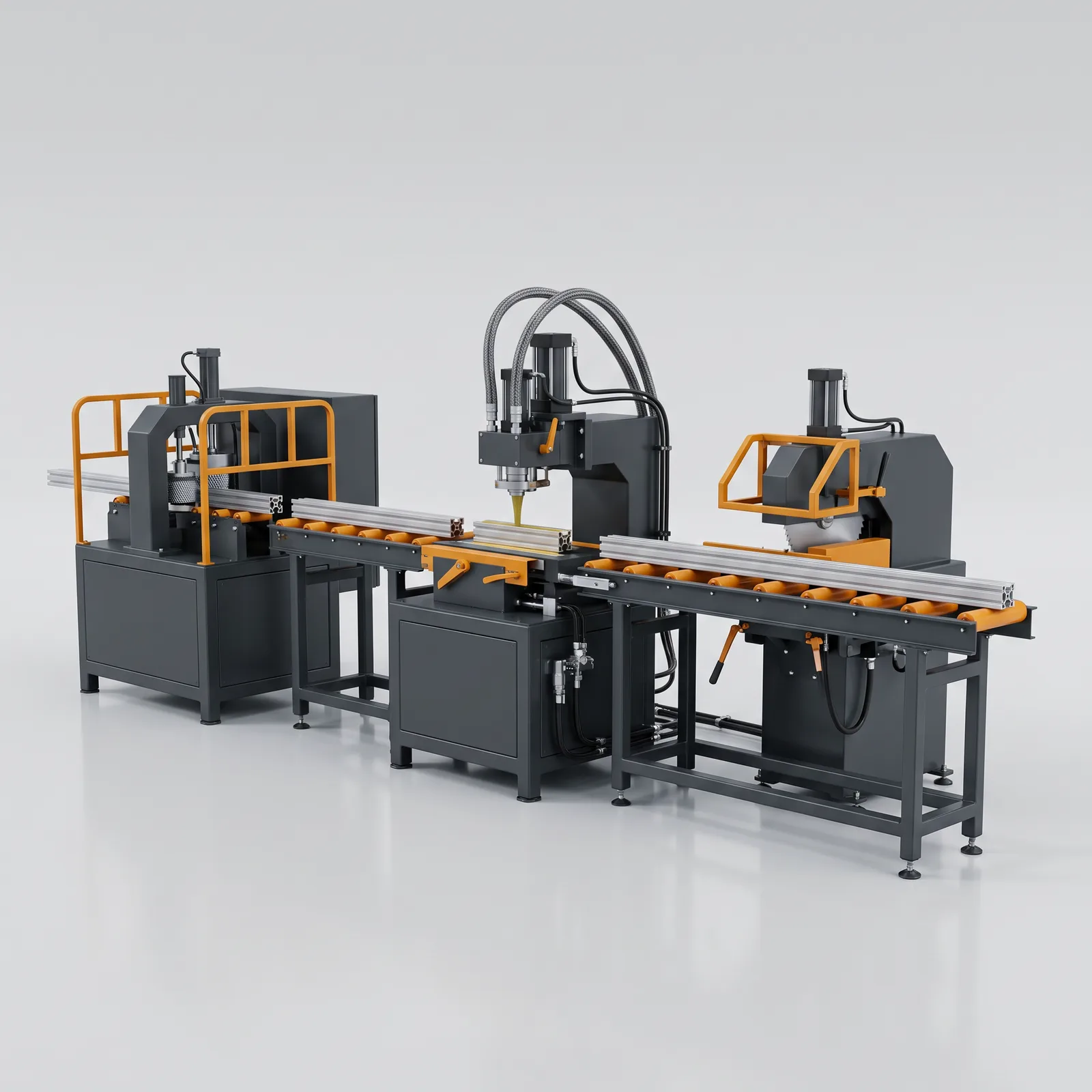
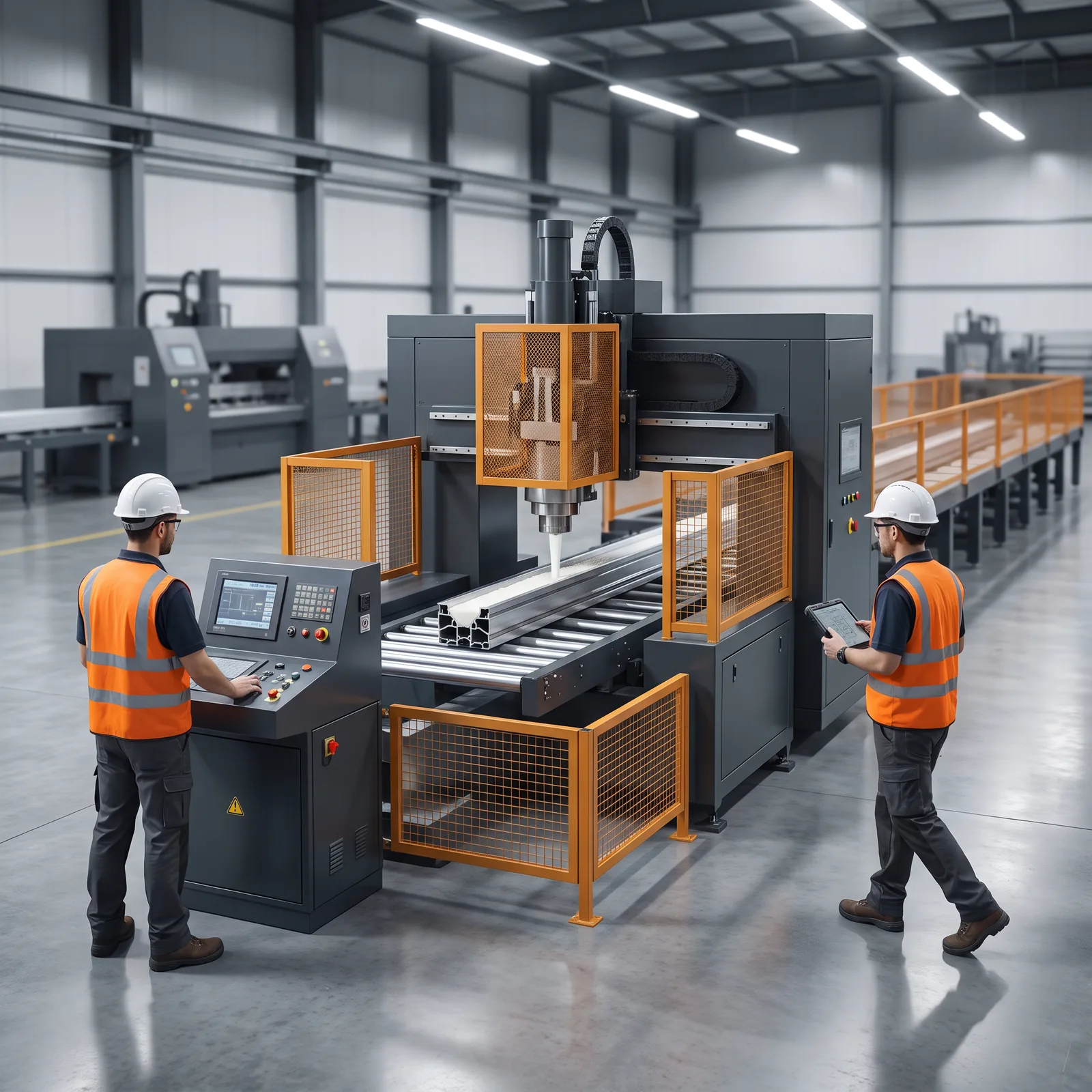
There are two ways to put a thermal barrier into an aluminium profile: roll in a polyamide strip, or pour polyurethane into a cavity and mill away the aluminium bridge so that only the resin connects the two halves. This line runs the second technology, pour-and-debridge, as a set of three machines: a knurling machine, a polyurethane pouring machine and a debridge saw.
The process starts with knurling: teeth cut into the cavity walls to give the polyurethane a mechanical anchor. The mixing head then combines the two resin components (A+B) immediately before pouring, with speed and flow adjustable to the width and depth of each profile's cavity. Once the resin has cured, the debridge saw removes the bottom of the cavity, leaving two aluminium halves joined by a solid PU bar.
We are straightforward about where this technology fits and where it does not. Polyurethane wins on entry cost: no strips to buy, no extruder, no die per cross-section; a milled cavity in the profile is enough. It suits short runs, unusual cross-sections and industrial profiles, and it is the standard method on the North American market. A PA66 GF25 polyamide strip, on the other hand, gives a mechanically stronger composite and is what most European window and facade systems specify; if you produce for system houses, compare this line against a thermal break rolling machine, and at high strip volumes an in-house PA66 strip extruder.
The factory-standard line needs EU conformity work (guarding, safety circuits, documentation); we show that cost in the offer instead of hiding it. Before quoting, send us your cross-section drawings: we will size the head, pouring parameters and debridge setup for your profiles.
Specification
| Line composition | 3 machines: knurling, PU pouring, debridge saw |
|---|---|
| Resin | two-component polyurethane (A+B) |
| Mixing | at the pouring head, immediately before application |
| Adjustment | pouring speed and flow matched to the profile cavity |
| Cavity preparation | knurled walls for mechanical PU anchoring |
| End result | profile halves joined by a solid polyurethane bar |
CE status
CE: machine requires EU conformity work, we arrange a compliance quote
→ How we workTransaction terms
- Production lead time: 8-12 wks
Applications
Polyurethane thermal barriers in door, industrial and refrigeration profiles; short runs and unusual cross-sections; profiles for markets where pour-and-debridge is the standard.
Who it is for
Extruders and profile fabricators wanting a low-cost entry into thermal barriers; profile exporters to pour-and-debridge markets; makers of industrial profiles with non-standard sections.
FAQ
How much does a pour-and-debridge line cost?
Indicatively €35-70k EXW for the three-machine set, depending on head and saw configuration. The range is public; the exact quote is prepared from your cross-section drawings.
Polyurethane or polyamide strip?
Polyurethane: lower start-up cost (no strips, no dies), flexibility for short runs and unusual cavities. PA66 GF25 polyamide: a stronger composite and the specification of most European window systems. Many plants end up running both technologies side by side, and we will price both routes for you.
What about CE?
The factory-standard line needs EU conformity work (guarding, safety circuits, documentation). We include the compliance cost in our offer and state plainly how conformity responsibility is handled when you buy from us.
Where do I source the resin?
The A+B components are standard thermal-barrier PU systems available from European chemical suppliers, so you are not locked to a single source. We help match a resin to the head parameters at start-up.