Anodising line for aluminium hardware and small parts
Price from-to, depending on configuration
80,000-250,000 EUR (EXW)
Price depends on configuration. Informational only (Art. 71 Polish Civil Code), not a binding offer. Verified: 2026-07-18.
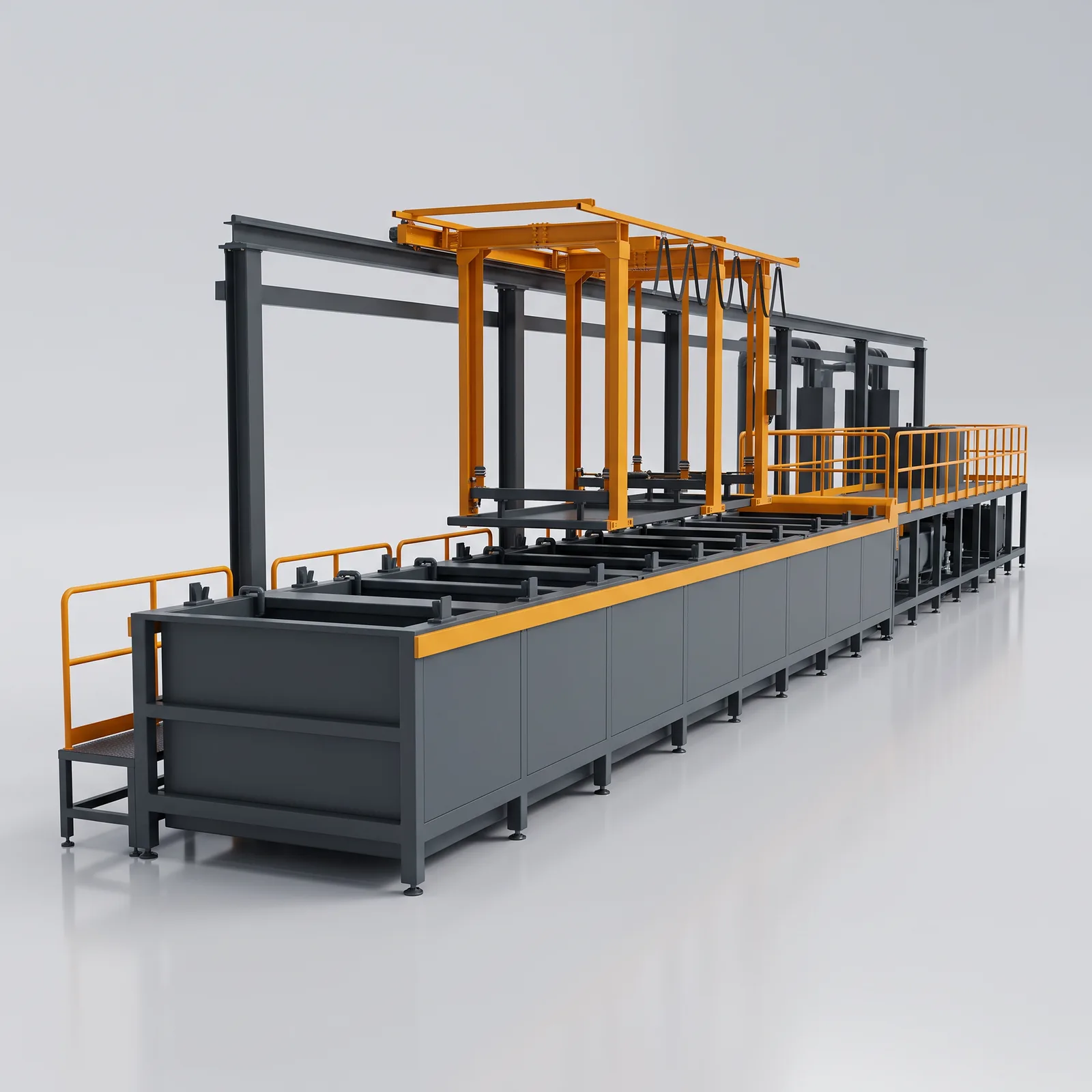
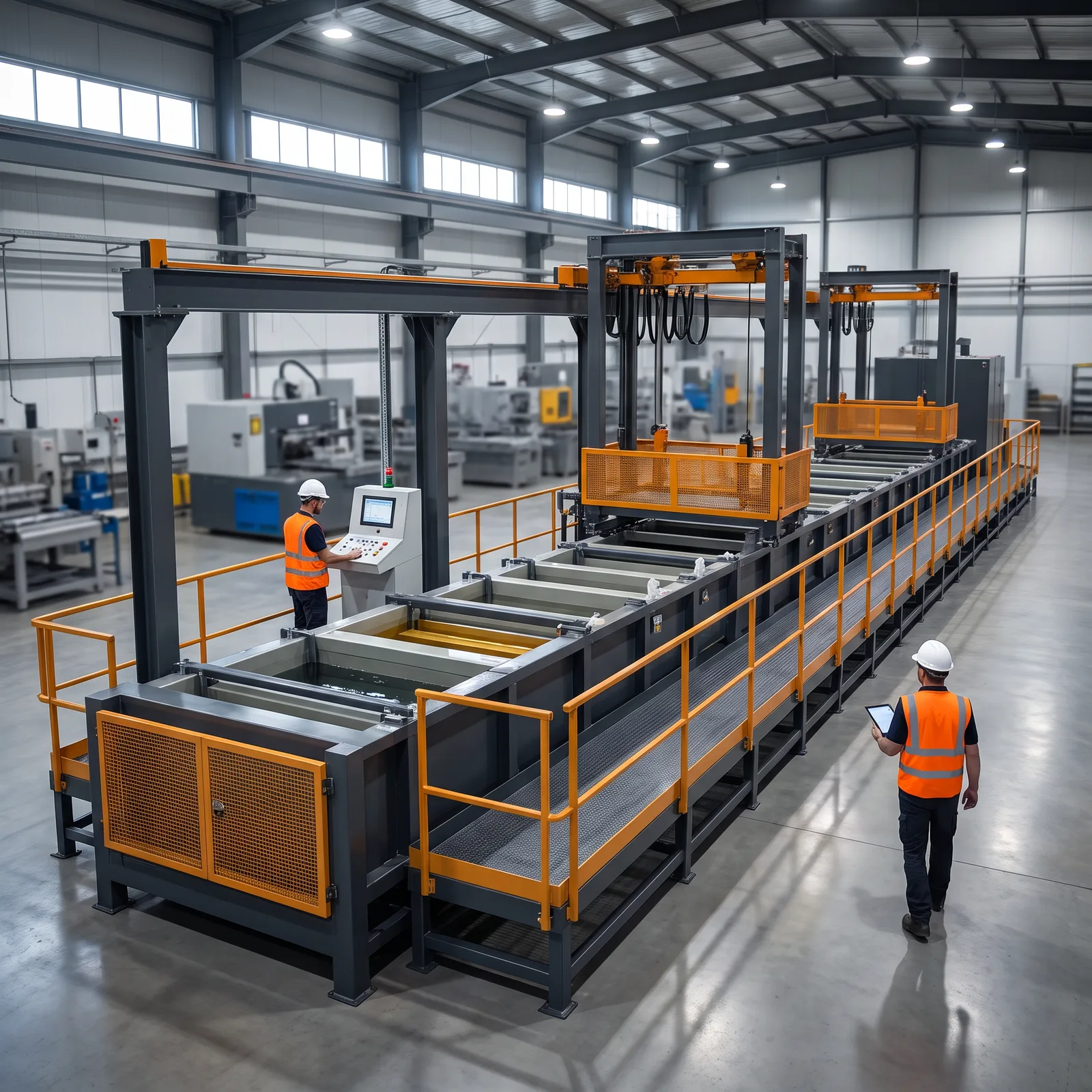
Anodising small parts (fittings, handles, electronics housings, machined automotive components) follows a different logic than anodising 6-metre extruded profiles. What matters here is parts per rack, batch-to-batch colour consistency and quick changeovers between product families. This line is built for exactly that: a full tank sequence of degreasing, etching (a choice of 2-3 bath chemistries), anodising, colour dyeing and sealing, with dedicated dyeing tanks for golden, silver, black, champagne and rose gold finishes.
You choose the automation level: manual (operators move racks between tanks; the lowest entry cost), semi-automatic, or fully automatic, where a PLC-guided transporter crane runs programmed dip-time recipes for every batch: the same part, the same recipe, the same colour, every time. Tank dimensions, throughput and maximum part length are engineered around your product mix and floor space; anodising tanks are powered by IGBT or SCR rectifiers, the same units described on our anodising rectifier page. (US spelling: anodizing line.)
The typical buyer is a CNC shop or parts maker currently trucking components to a job-shop anodiser and losing on lead times, transport and colour control. At a steady volume, an in-house line pays back faster than the job-shop invoice suggests; send us your monthly part volumes and we will run the numbers with you. If your work is extruded profiles rather than small parts, the right starting point is a compact profile line from our anodising lines category.
As with every machine we offer: a public price range, an honest CE status and a free tank-layout design for your building included in the quotation.
Specification
| Process stages | degreasing, etching (choice of 2-3 baths), anodising, colour dyeing, sealing |
|---|---|
| Colours | golden, silver, black, champagne, rose gold (others on request) |
| Automation | manual / semi-automatic / full-auto (transporter crane + PLC) |
| Tank power | IGBT or SCR rectifiers |
| Capacity & part size | customisable: tanks sized to your product mix and floor space |
| Scope | bath circulation and cooling, dyeing tanks, racks, workstation extraction |
CE status
CE: machine requires EU conformity work, we arrange a compliance quote
Linia w standardzie fabrycznym wymaga dostosowania do wymogów UE (osłony, wentylacja stanowiskowa, obwody bezpieczeństwa, dokumentacja). Zakres i koszt określamy w ofercie.
→ How we workTransaction terms
- Production lead time: 14-20 wks
Applications
Anodising and colour dyeing of architectural and furniture fittings, fasteners, electronics housings and heat sinks, machined automotive parts, aluminium accessories. Decorative and protective finishes.
Who it is for
CNC machining shops and parts manufacturers moving away from job-shop anodisers; job-shop finishers adding a small-parts section; hardware and accessory makers who want colour and lead times under their own control.
FAQ
How much does a hardware anodising line cost?
Indicatively €80-250k EXW. The lower end is a manual line at modest capacity; the upper end a full-auto plant with PLC transporter and extended dyeing. The exact quote follows your product mix, throughput and hall dimensions; the layout design is free.
How is this different from a profile anodising line?
Scale and process logic: the tanks are shorter, and the line is optimised for many parts per rack and repeatable batch dyeing rather than 6-7 m profile lengths. For extruded profiles, the right machine is a profile line; see our anodising lines category.
Manual, semi-auto or full-auto?
Manual suits low volumes and frequent product changes; full-auto wins on colour repeatability and labour cost at steady production. We most often recommend semi-auto with an upgrade path, and we will tell you plainly when the full-auto premium will not pay back.
What about CE?
The factory-standard line needs EU conformity work: guarding, tank extraction and ventilation, safety circuits, documentation. We state the scope and cost of that work in the offer instead of pasting a dubious CE sticker; our knowledge article on CE marking of Chinese machinery explains the process.