3000-tonne servo-driven aluminium extrusion press
Price from-to, depending on configuration
230,000-380,000 EUR (EXW)
Price depends on configuration. Informational only (Art. 71 Polish Civil Code), not a binding offer. Verified: 2026-07-18.
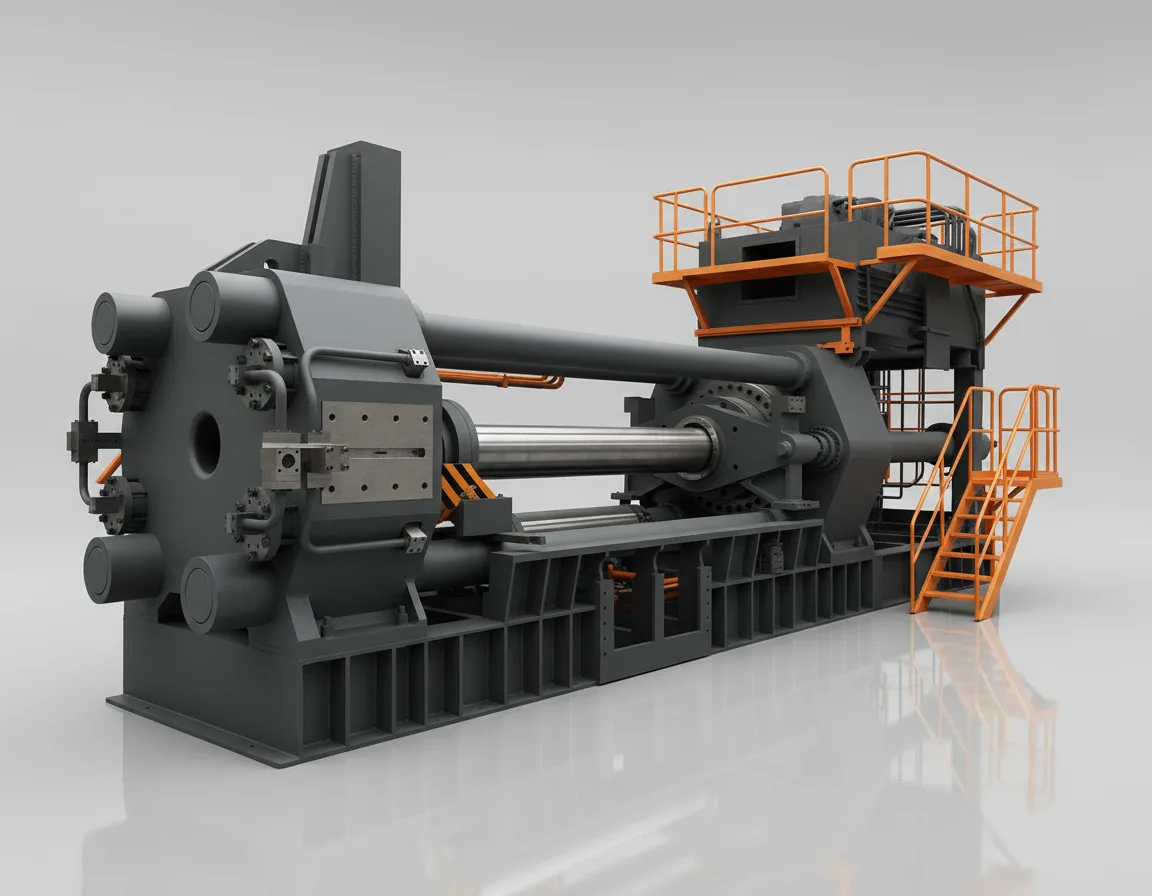
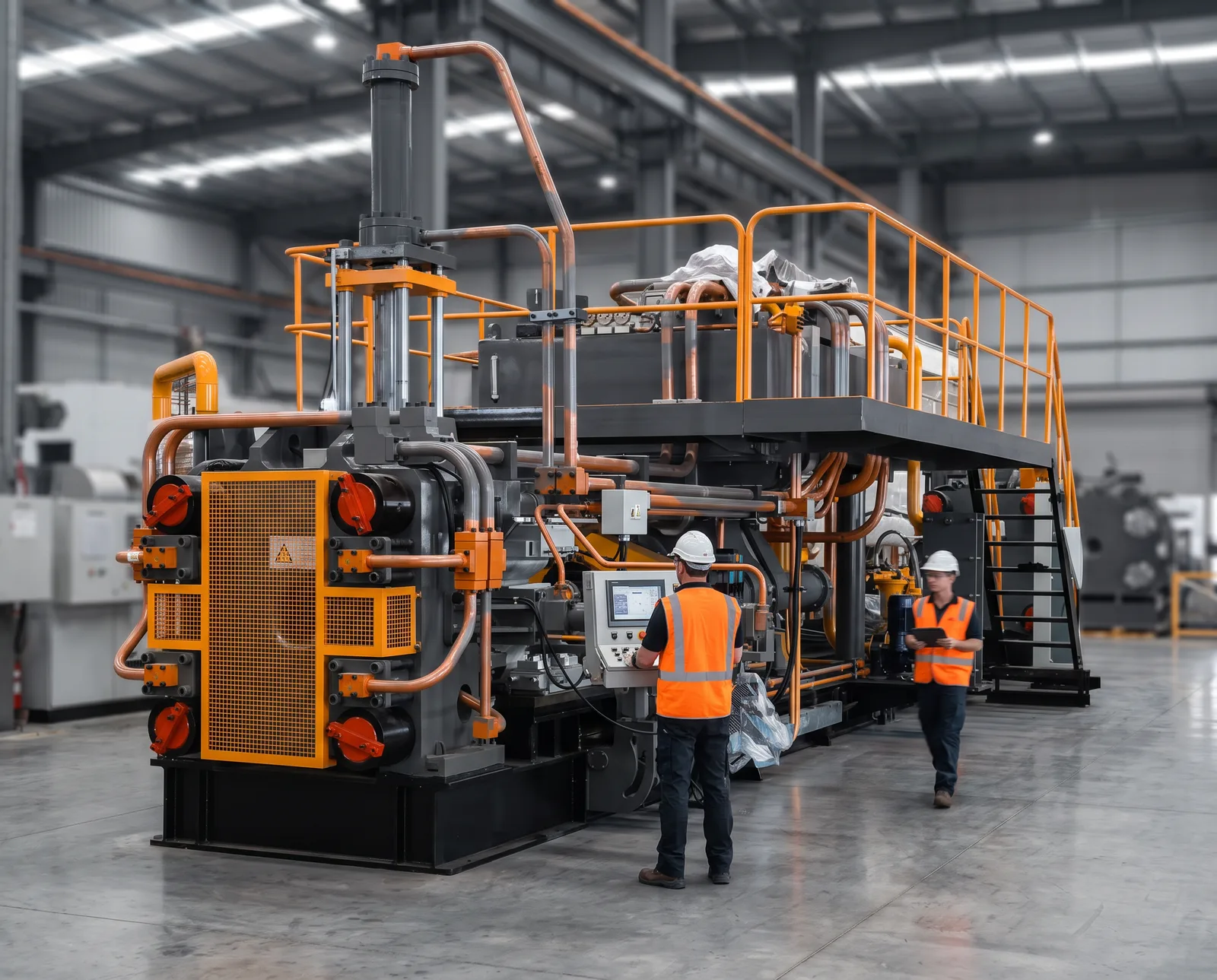
This 3000-tonne (3300 US ton) press for 9-inch billet (254 mm, up to 1100 mm long) is the entry ticket to heavy industrial extrusion: transport structures, large facade sections, e-mobility and energy-storage profiles, heavy heat sinks. The build follows the proven pattern for this class: pre-stressed tie-rod frame, forged ø1240 mm main cylinder, H13 container and stem.
The drive is what sets it apart. Servo motors coupled to the pumps deliver exactly the oil flow each phase of the cycle needs, so the press holds constant extrusion force at any ram speed, the precondition for a repeatable profile from the first metre of the billet to the last. The side effect shows up on the electricity bill: roughly 15-20% lower energy consumption than a conventional drive, plus less oil heating and a quieter shop floor. The 28-second dead cycle is an honest figure for a press this size; anyone quoting much less at 3000 tonnes should be asked to prove it during the FAT.
We are equally direct about what this machine demands. At 16.5 × 8.1 × 5.7 m it ships in several oversize sections, needs a foundation built to the manufacturer's drawings, an overhead crane and factory-crew installation, all of which we plan into the schedule from day one. The servo drive also costs more upfront than the VFD version; it pays back on two- and three-shift operation, and we run that calculation with you on your own power rates before you sign, not after. As with every factory-standard press, EU conformity work on guarding and safety circuits is required. We quote that process openly instead of promising a ready-made CE sticker. (US spelling: 3000 ton aluminum extrusion press.)
Specification
| Force | 3000 t (3300 US ton) |
|---|---|
| Billet | 9″ (254 mm), up to 1100 mm long |
| Main cylinder | ø1240 mm, forged |
| Dead cycle | 28 s |
| Drive | servo (constant force at any speed); option: VFD |
| Energy saving | approx. 15-20% vs conventional drive |
| Machine dimensions | approx. 16.5 × 8.1 × 5.7 m |
| Materials | H13 container & stem, pre-stressed frame |
CE status
CE: machine requires EU conformity work, we arrange a compliance quote
→ How we workTransaction terms
- Production lead time: 22-30 wks
Applications
Heavy industrial profiles: rail and trailer structures, large facade sections, e-mobility and battery-enclosure profiles, heavy heat sinks, machine-building and structural sections.
Who it is for
Industrial extruders moving into large sections, plants supplying rail and automotive contracts, companies replacing a worn-out high-tonnage press with an energy-efficient machine.
FAQ
How much does a 3000 ton servo extrusion press cost?
Indicatively €230-380k EXW depending on configuration: servo or VFD drive, stroke length, loading, line equipment. The range on this page is public; the exact quote is prepared for your profile mix and building.
Is the servo drive worth the premium over VFD?
Servo saves roughly 15-20% energy and holds constant force at any speed, but costs more upfront. On single-shift operation the payback is slow; on two or three shifts it typically lands within 2-4 years. We calculate both variants on your actual power rates.
What does this press require from the building?
The machine is 16.5 m long and nearly 6 m tall; it needs a foundation built to the manufacturer's drawings, an overhead crane and oversize transport in several sections. Foundation drawings come at contract stage; installation is done by the factory crew.
What about CE conformity?
The factory-standard press needs EU conformity work (guarding, safety circuits, documentation). We arrange the compliance quote and state plainly how conformity responsibility is handled when you buy from us.