2100-tonne short-stroke aluminium extrusion press
Price from-to, depending on configuration
120,000-190,000 EUR (EXW)
Price depends on configuration. Informational only (Art. 71 Polish Civil Code), not a binding offer. Verified: 2026-07-18.
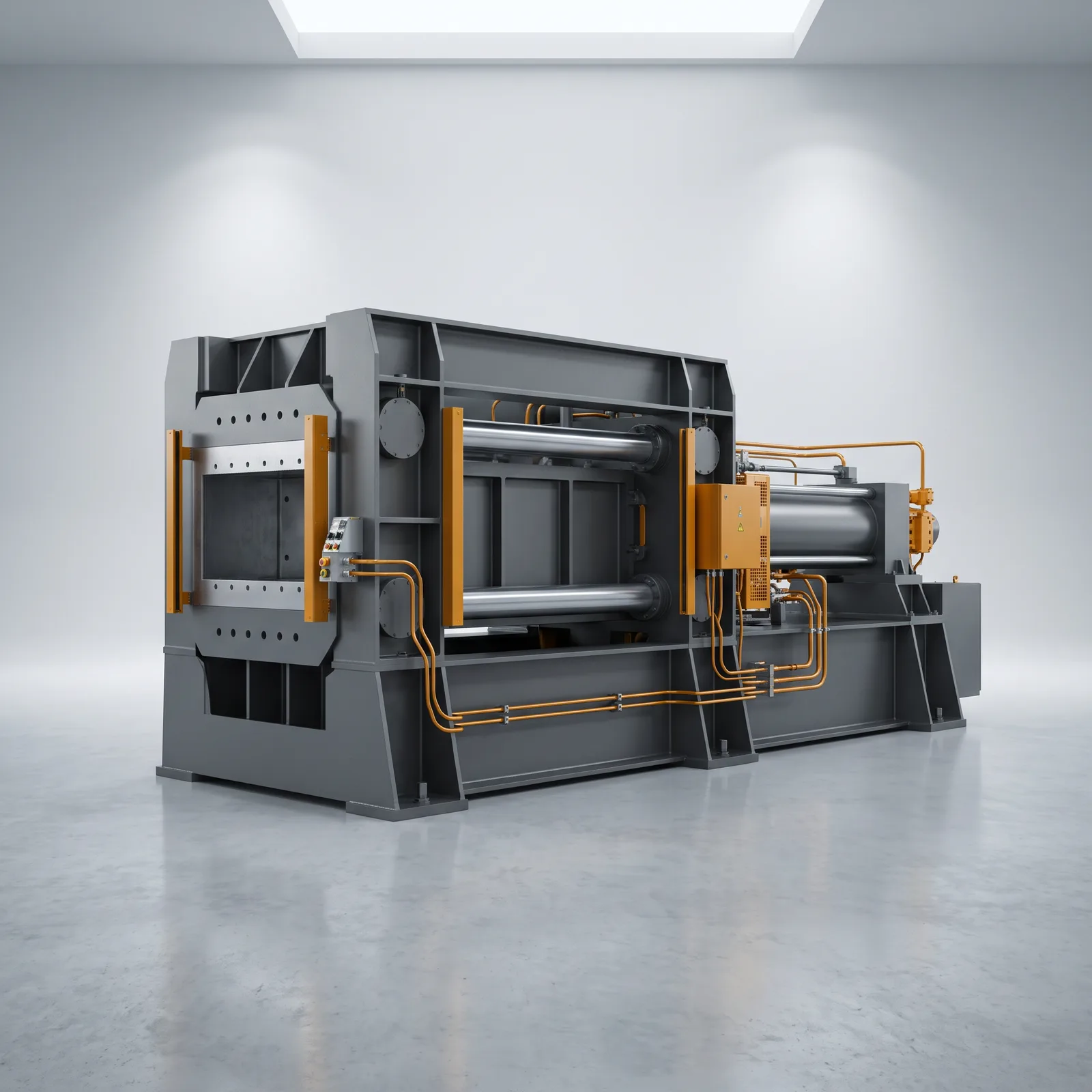
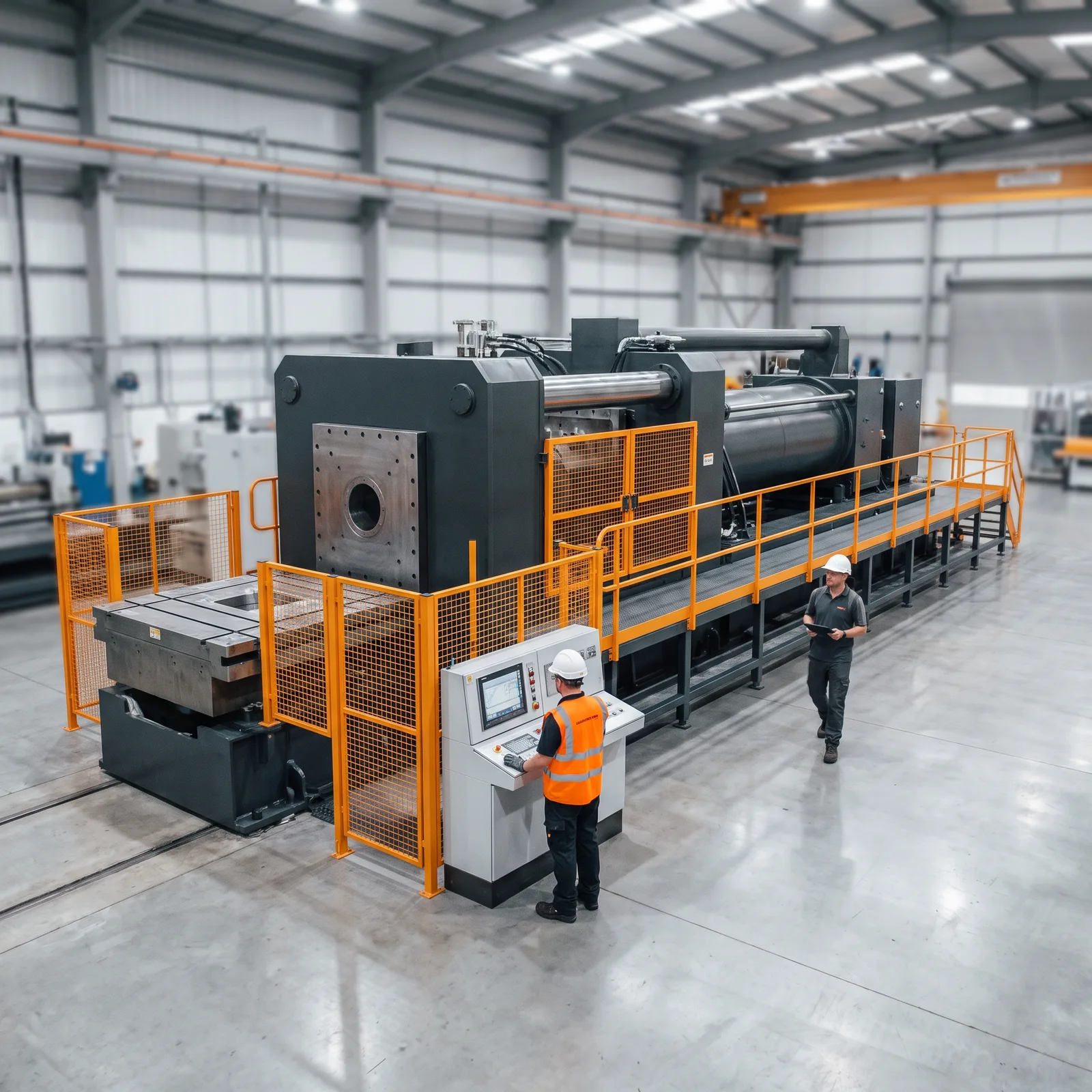
A press built around one number: cycles per shift. This 2100-tonne (2300 US ton) short-stroke machine for 8-inch (203 mm) billet completes its dead cycle in 25 seconds and extrudes at up to 18 mm/s, figures that place it among the fastest presses in the 2000-tonne-plus class. For high-volume aluminium profiles in construction and automotive, that means more tonnes per month from the same floor space and the same crew.
Where does the speed come from? The short-stroke layout cuts the travel of the stem and main cylinder to the minimum, with a manipulator placing the billet directly in front of the container. Less idle travel means less dead time between extrusions and, as a bonus, a shorter and stiffer machine. Hydraulics run on four genuine Rexroth pumps at 210 kgf/cm², and the VFD drive cuts energy consumption by roughly 15% against a conventional drive. The main cylinder is forged, the piston is alloy cast iron, and the container liner, stem and dummy block are H13 tool steel. Control is PLC-based with a Proface touchscreen.
The honest trade-off: short stroke caps billet length at 950 mm. On very long runs of a single large profile, a long-stroke press with a longer billet makes fewer cycles and leaves proportionally less butt scrap. On a typical mix of construction and automotive sections with frequent die changes, the faster cycle beats the longer billet, which is why we recommend this layout for volume production, and say so plainly when it is not the right fit. Send us your cross-sections and batch sizes and we will calculate throughput for both layouts. Like every aluminum extrusion press we supply, this one is FAT-tested before shipment and can be delivered as part of a complete line (billet furnace, puller, run-out table, stretcher, saw and aging oven) on one schedule.
Specification
| Force | 2100 t (2300 US ton) |
|---|---|
| Billet | 8″ (203 mm), up to 950 mm long |
| Working pressure | 210 kgf/cm² |
| Extrusion speed | up to 18 mm/s |
| Dead cycle | 25 s |
| Hydraulics | 4 × Rexroth pumps, VFD drive (approx. 15% energy saving) |
| Materials | forged main cylinder, alloy cast iron piston, H13 container liner, stem & dummy block |
| Control | PLC + Proface touchscreen |
CE status
CE: machine requires EU conformity work, we arrange a compliance quote
→ How we workTransaction terms
- Production lead time: 20-28 wks
Applications
High-volume automotive profiles (battery systems, crash boxes, structural members), window, door and facade systems, photovoltaic structures, mid-to-large industrial sections.
Who it is for
Volume extruders whose bottleneck is cycle time, automotive suppliers, plants maximising output from limited floor space.
FAQ
How much does a 2100 ton short-stroke extrusion press cost?
Indicatively €120-190k EXW depending on configuration (billet length, loading, auxiliary equipment). The range on this page is public and kept up to date. The exact quote is prepared for your profiles and building.
Why is a short-stroke press faster, and what is the catch?
Shorter stem and cylinder travel means less idle movement between extrusions, hence the 25 s dead cycle. The catch: billet length is limited to 950 mm, so very long runs of one profile generate proportionally more butt scrap than on a long-stroke press. For a mixed production programme the faster cycle usually wins. We will calculate both layouts on your sections.
What is the lead time?
20-28 weeks of production plus roughly 6-8 weeks of sea freight, with a FAT test at the factory before shipment. Anyone promising a 2000-tonne-class press substantially faster is selling a stock configuration or bluffing.