De-slagging flux for aluminium dross and melt cleaning
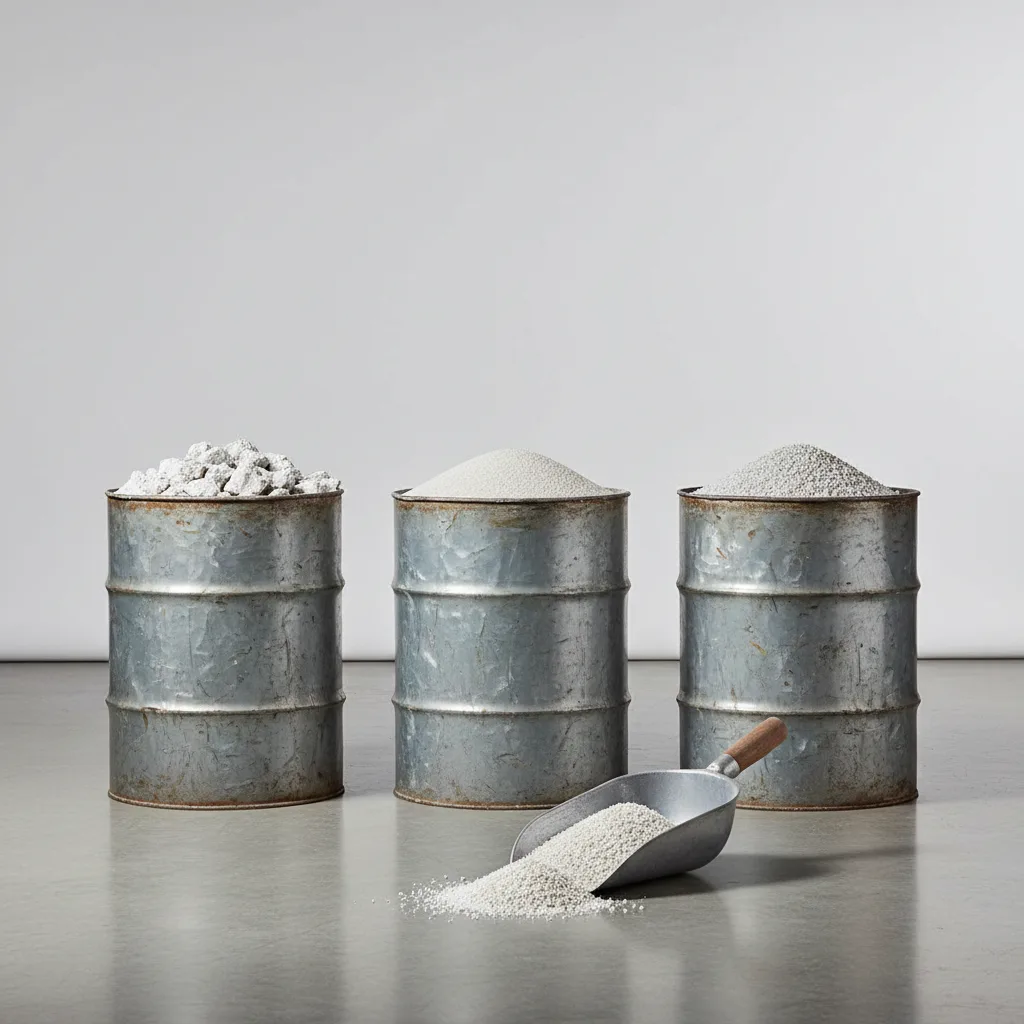
De-slagging flux is the consumable that makes dross processing pay. A blend of chloride and fluoride salts, spread over hot dross or the melt surface, it cuts the surface tension between metal and oxides: trapped aluminium droplets coalesce and drain into the collection pot instead of leaving your plant inside slag sold for scrap value.
We supply flux for two jobs. First, dross processing: in a hot dross recovery machine running at 700-750°C, flux is the precondition of the >85% metal recovery rate the equipment is rated for. Second, melt cleaning and skimming in melting and holding furnaces: regular fluxed skimming means a cleaner bath, fewer inclusions in your billets and less metal lost with the skimmings. Indicative consumption: 1-2 kg per 100 kg of dross in recovery work, 0.1-0.25% of charge weight for bath refining; we match the exact grade and dosage to your alloy and dross condition.
As a consumables supplier we work differently than on machinery deals: what matters is availability and repeatability. Flux ships in 25 kg bags on pallets (big-bags on request) from the manufacturer's warehouse within 1-3 weeks, as a standalone pallet shipment or tucked into a container with a machine order, which makes the freight essentially free. First orders can start with a trial batch tested on your own dross before you commit to a pallet.
Instead of a dubious CE sticker (which simply does not apply to chemical products) you get the paperwork that actually matters: a CLP-compliant safety data sheet with every batch and a straight answer on REACH registration status before first delivery. Flux belongs alongside our aluminium dross recycling machines and aluminium melting furnaces; buy the line from us and the consumables come from the same source.
Specification
| Type | de-slagging flux / refining flux |
|---|---|
| Form | powder or granulate |
| Chemical base | chloride and fluoride salt blends |
| Working temperature | 700-800°C |
| Consumption (dross recovery) | approx. 1-2 kg / 100 kg of dross |
| Consumption (bath refining) | approx. 0.1-0.25% of charge weight |
| Packaging | 25 kg bags on pallets (big-bag option) |
| Documentation | safety data sheet (SDS), CLP labelling |
CE status
CE status is determined per machine configuration
Produkt chemiczny, więc oznakowanie CE (dyrektywa maszynowa) nie ma tu zastosowania. Do każdej partii dostarczamy kartę charakterystyki (SDS) zgodną z CLP; status rejestracji REACH weryfikujemy przed pierwszą dostawą i mówimy wprost, co jest po stronie importera.
→ How we workTransaction terms
- Production lead time: 1-3 wks
Applications
Dross processing in hot dross recovery machines, skimming and bath refining in melting and holding furnaces, metal cleaning before billet casting in foundries and extrusion plants with in-house remelting.
Who it is for
Foundries and extruders running their own melting furnaces, operators of dross recovery machines (ours or anyone else's), plants currently selling dross to scrap buyers who want to keep the metal in-house.
FAQ
How much does de-slagging flux cost?
Pricing is per tonne (25 kg bags on pallets) and depends on the grade, volume and whether it ships standalone or rides along in a container with a machine order, so we do not publish a single number here. Tell us your monthly dross tonnage and you will get a quote with per-tonne price and delivered cost within 48 hours.
Is the flux CE certified?
No, and it cannot be: CE marking applies to machinery, not chemical products. The documents that matter are a CLP-compliant safety data sheet (SDS), supplied with every batch, and the REACH registration status, which we verify and state plainly before first delivery.
How much flux will I actually use?
In a dross recovery machine: roughly 1-2 kg per 100 kg of dross, depending on its condition (hot dross straight from the furnace needs less). For bath refining: 0.1-0.25% of charge weight. A one-tonne pallet typically lasts a mid-size plant several months.
What does delivery look like, and can I get a sample first?
Shipment from the manufacturer's warehouse within 1-3 weeks: as a pallet consignment or consolidated into a container with a machine order (freight essentially free). We start with a trial batch you test on your own dross; the pallet order comes after.